
How to Play: Your First Season
Management games are easy to start and easy to get wrong in ways you only notice ten matches later. This is the short version of what matters in your first season of Goal Legends, in the order you will meet it.
1. Claiming a club
You pick one club from one of sixteen divisions across eight countries. The instinct is to take the strongest squad available. Consider not doing that. A mid-table side in a second division gives you room to actually improve something, and improvement is what the game measures. Taking the best squad in the division means your only possible outcomes are "won it, as expected" or "somehow didn't".
Look at the squad before you commit: the age profile matters more than the overall rating. A team of 31-year-olds is a team that gets worse every season you own it.
2. Picking a formation
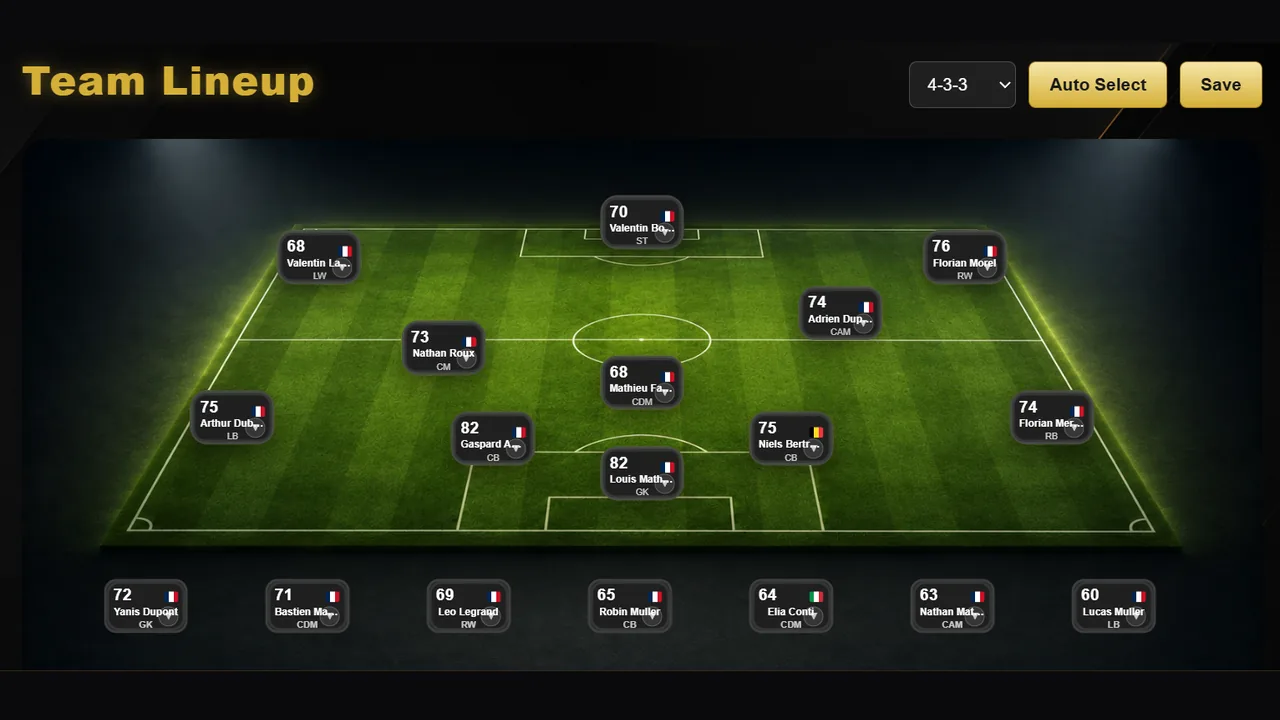
There are six: 4-3-3, 4-4-2, 4-2-3-1, 3-5-2, 3-4-3 and 5-3-2. The right one is whichever your existing players fit. Pick the shape that puts the most players in their natural positions: a good striker played out wide is a worse asset than an average winger there.
If you are unsure, 4-4-2 and 4-3-3 are the forgiving ones. The back-three shapes (3-5-2, 3-4-3) ask more of your wing-backs than most squads can give in season one.
3. Setting your tactics
Six settings sit on top of your formation, and the match engine reads every one of them:
- Pressing intensity: how aggressively you hunt the ball. High pressing wins it back sooner and tires your players faster.
- Tempo: how quickly you move it forward. Fast creates more chances and more turnovers.
- Passing style: short, balanced or direct. Direct skips the midfield build-up entirely; it suits a target man and wastes a good playmaker.
- Defensive line: deep, normal or high. A high line squeezes the pitch and invites balls in behind.
- Width: narrow, balanced or wide. Wide stretches their defence and leaves gaps in your own middle.
- Marking: zonal or man-marking.
Change one thing at a time. If you adjust all six after a bad result you will learn nothing from the next one.
4. The transfer market
Players are listed and bid on, and other managers are bidding against you. When you place a bid the funds are reserved against your budget straight away, so you cannot stack four bids on the same money and hope only one lands.
The first-season mistake is spending the whole budget on one marquee signing. A squad has to survive injuries, suspensions and fixture congestion; one excellent player and no depth is how promising seasons collapse in the last two months.
5. Wages, and why clubs die
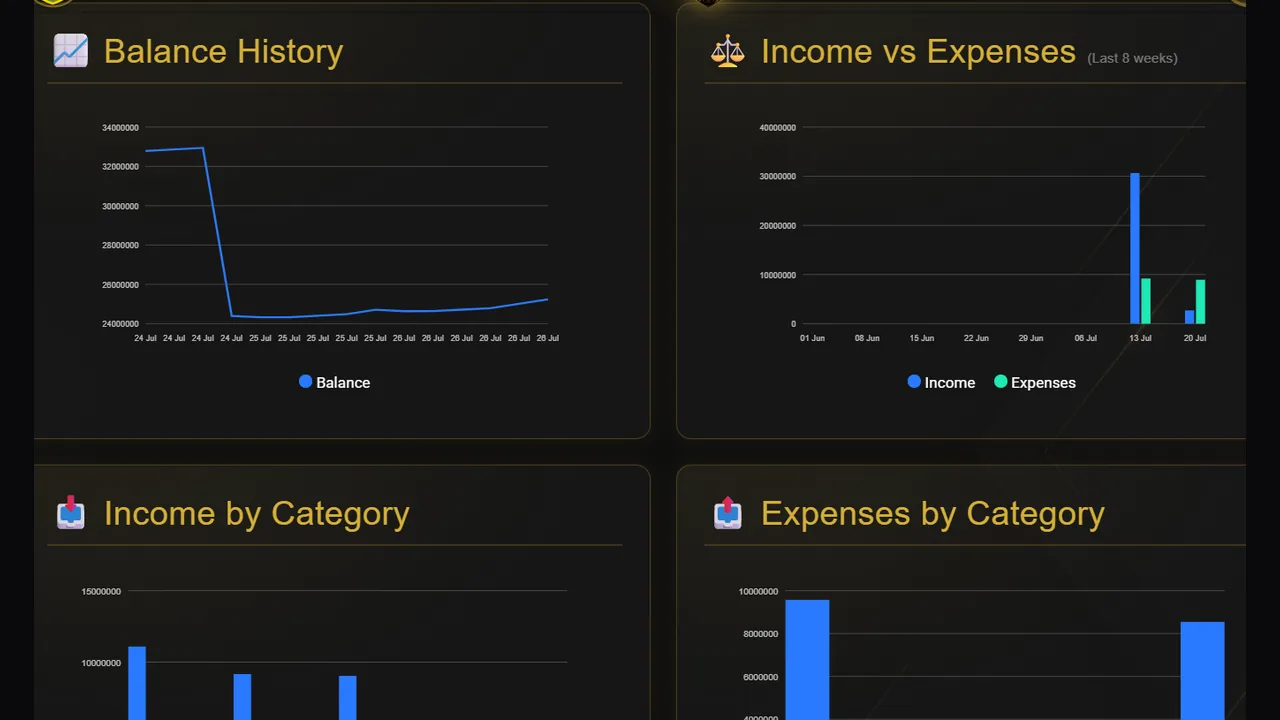
Wages are paid on a daily cycle out of real income: sponsorship, merchandise and matchday revenue. The transfer fee is the small number; the wage is the one that recurs. A signing you can afford to buy and cannot afford to pay is worse than no signing at all, and the damage shows up steadily over a season rather than all at once.
6. How matches actually happen
The game world runs on its own clock. Matches kick off at their scheduled time and simulate whether or not you are logged in, so there is no penalty for being asleep. Each one is played out across 180 possessions, ball by ball, rather than resolved by comparing two team ratings, which is why tactical changes show up in the result rather than just in the interface.
What this means practically: set your lineup and tactics before kickoff, and plan substitutions in advance. You cannot intervene mid-match, so the preparation is the game.
7. Playing the long game
Between seasons you can upgrade club facilities, which is the compounding investment most new managers skip in favour of one more signing. Your youth setup produces its own prospects. Managers can also be elected to run a national team through qualifying and into a World Cup.
None of that is available in your first month, and none of it matters if you get relegated. Survive first.
More detail in the FAQ, or read about what the game includes. Stuck on something specific? The forum is where managers argue about formations.